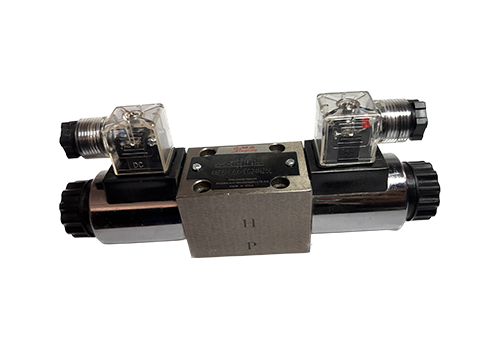
2025-12-25 The usage method of 4WE6 high-pressure solenoid directional valve is as follows: 1. Before installation, prepare to check the solenoid valve to confirm that there is no damage to the appearance (such as shell rupture, coil damage), and the model specifications are consistent with the design requirements, including working pressure, flow, voltage and other parameters. Check the nameplate parameters (such as nominal pressure, diameter, voltage type) to ensure they match the actual working conditions. Clean the pipes: Clean the inside of the connecting pipes to remove impurities, rust, welding slag and other foreign matter to prevent the valve core from jamming or loose sealing. It is recommended to flush the pipeline under 0.3MPa pressure to ensure the purity of the medium. Choose an installation location that is dry, well-ventilated, and convenient for operation and maintenance. Avoid strong vibrations, shocks, or close to heat sources, and stay away from low recesses in pipes and container discharge pipes. If the medium may cause water hammer, you need to select a model with waterproof hammer function or take preventive measures. 2. Installation steps: Determine the installation direction strictly according to the medium flow direction marked on the valve body (usually marked with an arrow or '→'
Read More 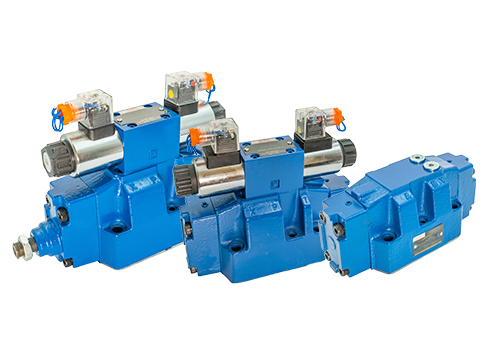
2025-12-22 The disassembly and assembly steps of the 4WEH16 electro-hydraulic reversing valve are as follows: 1. Disassembly steps Preparation work Ensure that the equipment is in a shutdown state, release system pressure, and prevent hydraulic oil from splashing. Prepare tools: Allen wrench, screw driver, kerosene or diesel, clean container, copper rod (steel/iron rod is prohibited), recording tools (such as notebook, camera). Disassemble the electromagnet part and remove the electromagnet coil: Use an Allen wrench to loosen the locking nuts at both ends of the electromagnet coil and gently take out the coil. Take out the spring and push rod: use a screwdriver to gently pry the joint surface, take out the spring, push rod and other small parts, and note their position and direction. Separate the pilot solenoid valve: Loosen the four screws fixing the pilot solenoid valve and remove it from the hydraulic directional valve to become two parts. Disassemble the main valve part and take out the main valve core: remove the main valve core from the valve body and pay attention to the assembly direction of the valve core (cannot be installed upside down, it is directional). Disassemble other parts: take out the positioning sleeve and seals (such as O-type
Read More 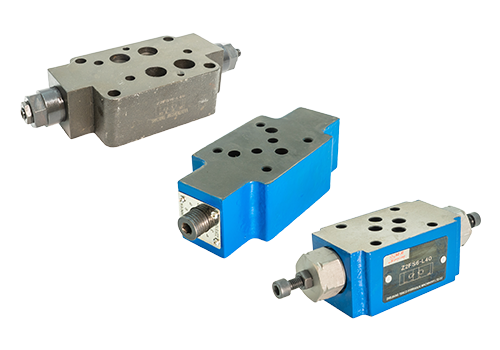
2025-12-19 There are significant differences between the superimposed hydraulic control check valve and the hydraulic lock in terms of function, structure, application scenarios and installation methods. The specific differences are as follows: 1. Functional positioning The core function of the superimposed hydraulic control check valve: adding a hydraulic control function to the one-way valve, allowing the oil to flow freely in the forward direction, and in the reverse direction, it can be actively opened by external control of oil pressure to achieve two-way flow. Additional functions: Hydraulic cylinder support: prevents the vertical hydraulic cylinder from sliding down due to slide valve leakage. Pressure maintenance: The tightness of the poppet valve is used to maintain pressure for a long time and make up for the gap leakage problem of the slide valve type reversing valve. Locking: When the reversing valve is in the neutral position, the hydraulic cylinder oil is sealed in both directions to prevent external force from moving the piston. Large flow oil discharge: When the hydraulic cylinder retreats, the oil pressure is controlled to open the hydraulic control check valve to avoid the throttling restriction of the small flow slide valve. Oil filling: When the vertical hydraulic cylinder descends at high speed, it acts as an oil filling valve to replenish oil to prevent air suction and negative pressure. Combined reversing: Two hydraulically controlled check valves are connected in parallel with the one-way valve to simulate three-position three-way reversing.
Read More 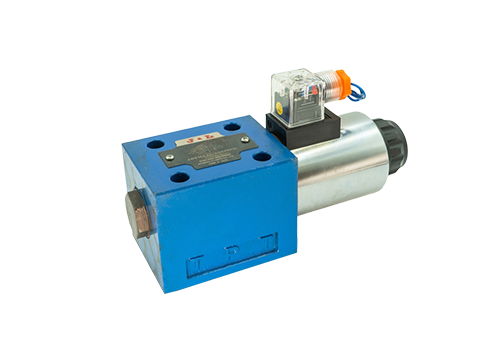
2025-12-16 The single-head electromagnetic directional valve controls the movement of the valve core through electromagnetic force to control the flow direction, flow rate, speed and other parameters of the fluid in the hydraulic system. Its working principle and control method are as follows: Working principle and basic structure: The single-head electromagnetic directional valve is mainly composed of valve body, valve core, spring, armature and solenoid coil. There is a closed cavity in the valve body. According to actual needs, holes are opened in different positions of the cavity to communicate with the outside. Each hole will be connected to the corresponding pipeline. A valve core is installed in the middle of the cavity. The valve core and the armature are integrated, and an electromagnet and a spring are installed on each side. Electromagnetic control: When the electromagnet is energized, it will generate a certain electromagnetic force. When this electromagnetic force exceeds the elastic force of the spring, it will attract the valve core and control the opening or closing of the external hole through the movement of the valve core. When the solenoid coil is powered on and off, the valve core will move left and right, and the spring will act as a buffer to prevent the valve core from exerting too much force on the valve body.
Read More 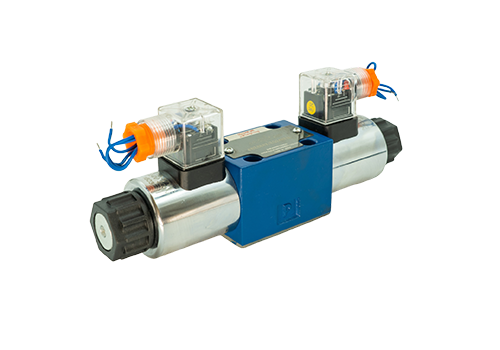
2025-12-13 The four holes (P, T, A, B) of the solenoid directional valve themselves do not involve the distinction between positive and negative poles. Their function is to control the flow direction of the fluid, not the direction of the current. The following is a detailed explanation: The function of the four holes of the solenoid reversing valve is P port (pressure oil source): connected to the outlet of the hydraulic pump to provide pressure oil for the system. T port (tank return): connected to the fuel tank for oil return. Port A and Port B: are respectively connected to the actuator (such as the two chambers of the hydraulic cylinder), and the oil circuit is switched on and off and the flow direction is changed through the valve core switching. The working principle of the electromagnetic reversing valve is that the electromagnetic reversing valve drives the displacement of the valve core through the electromagnet, switches the direction of the oil circuit, and thereby controls the movement direction of the actuator such as the hydraulic cylinder or motor. For example, when the electromagnet is energized, the valve core moves to make P→A, B→T, and the actuator moves in the forward direction; otherwise, P→B, A→T, and the actuator moves in the reverse direction. The relationship between the electromagnetic reversing valve and the positive and negative poles. The electromagnet part: The electromagnet part of the electromagnetic reversing valve may involve
Read More 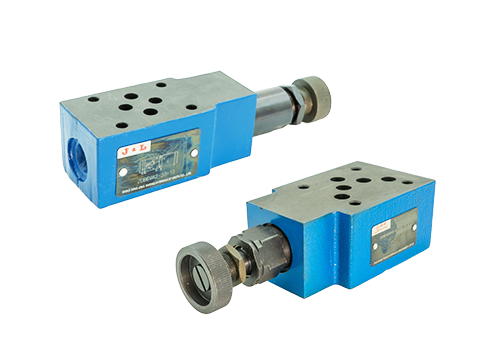
2025-12-11 To adjust the pressure of the superimposed relief valve, the core is to turn the adjusting screw clockwise to increase the pressure and turn it counterclockwise to decrease the pressure. Be sure to perform the operation in stages and tighten the nut. The specific steps are as follows: Loosen the lock nut: Find the lock nut on the valve body and use a wrench to loosen it to prepare for adjustment. Adjust pressure: Use a wrench to hold the adjusting screw. Turn clockwise (tightening) to gradually increase the system pressure, and turn counterclockwise (loosen) to reduce the pressure. It is recommended to rotate 1/4 turn for each adjustment, then observe the pressure gauge reading, and wait for the pressure to stabilize before proceeding to the next step. Lock Nut: After the pressure is adjusted to the required value, use a wrench to retighten the lock nut to fix the position of the adjusting screw to prevent pressure fluctuations. Key notes: Step-by-step pressure increase: Do not adjust the pressure to the target value all at once. Adjust it step by step multiple times and allow the system to run stably for a few minutes after each adjustment. Use a torque wrench
Read More 


