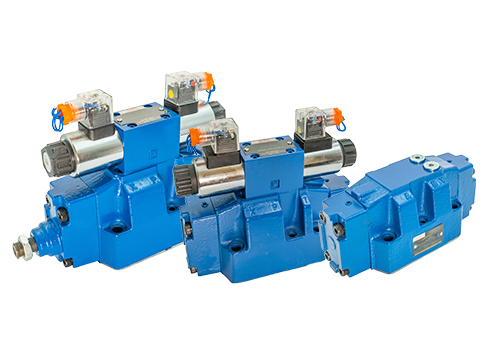
2025-09-29 4WEH16 electro-hydraulic reversing valve is a combination device of an electromagnetic reversing valve and a hydraulically controlled reversing valve. The pilot oil circuit is controlled through the solenoid valve, and the main valve core is driven to move, realizing the switching of the direction of large flow liquid flow. Its working principle can be divided into the following steps: 1. The structure consists of a pilot solenoid valve: As a control unit, it is usually a two-position four-way or three-position four-way solenoid valve, and the valve core position is changed by energizing/disconnecting the solenoid. Main valve: Hydraulic reversing valve, with control chambers at both ends of the valve core, which pushes the valve core to move through pressure oil. Control oil circuit: includes two methods: internal oil supply (take oil from the main valve port P) and external oil supply (through independent oil circuit). The return oil is returned to the oil tank through the T port or the Y port. 2. Median state (both solenoids are powered off) Pilot valve state: The valve core is in the middle position under the action of the centering spring, cutting off the oil supply from the main valve control chamber. Main valve status: The pressure oil of the control chamber is returned to the oil tank through the T-port of the pilot valve, and the pressure at both ends of the main valve core is equal. Main valve core centering spring
Read More 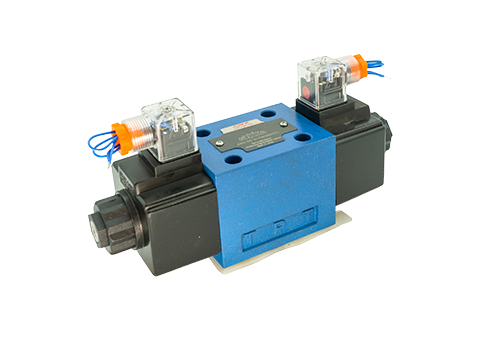
2025-09-26 4WE10 electromagnetic reversing valve is a key control element widely used in hydraulic systems. Its working principle is based on the solenoid force driving the valve core movement, thereby changing the fluid channel and realizing the fluid reversing control. The following is its detailed working principle: 1. The core structure consists of the 4WE10 solenoid reversing valve mainly consists of the following parts: valve body: housing, with multiple fluid channels designed inside, including one inlet and multiple outlets. Valve spool: a movable component that controls the flow direction of fluid through position changes. Electromagnet: A driving device, usually a wet AC or DC electromagnet, generates electromagnetic force when powered on. Reset spring: Used to reset the valve core to ensure that the valve core returns to its initial position when the power is off. Pilot control valve (some models): control the main valve core action through small flow rate to achieve more precise control. 2. Working principle 1. Electromagnetic force is generated during the electromagnet power-on stage: When the electromagnet is powered on, the coil generates a magnetic field, attracting the iron core (valve core) to move. valve
Read More 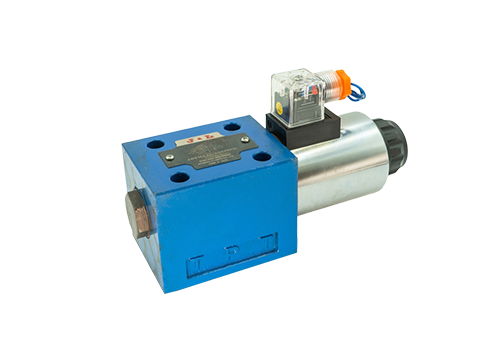
2025-09-24 As a hydraulic control component for electromagnetic drive, the 4WE10 single-head solenoid reversing valve needs to focus on six core links: installation specifications, oil cleanliness, electrical matching, pressure flow control, operation interlocking and maintenance. The specific precautions are as follows: 1. Installation specifications: Ensure structural stability and sealing horizontal installation requires that the valve body axis should be kept horizontal to avoid vertical installation causing reversing or resetting actions of valve cores, armatures and other parts due to self-weight. For example, if installed vertically, the valve core may not be fully reset due to gravity, causing internal leakage or action stagnation. The flatness of the installation surface The surface of the installation base plate needs to be grounded and processed, and the flatness error does not exceed 0.05mm to prevent the valve body from deforming due to the protrusion of the installation surface, which will cause the valve core to be stuck or seal failure. The connecting screw is uniformly pressed and tightened symmetrically when fixing the connecting screw to avoid deformation of the valve body due to single-side stress. There was a case where the screw tightening force was uneven, resulting in a gap between the valve core and the valve body hole.
Read More 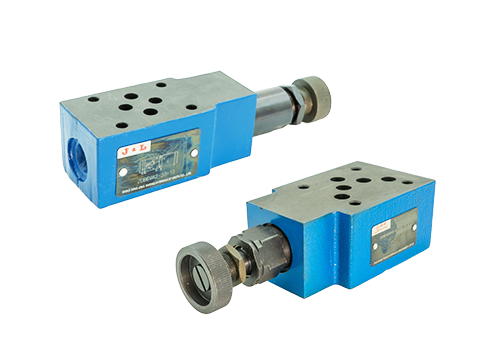
2025-09-22 During the production process of the superimposed relief valve, in order to ensure its stable performance, safety and reliability, special attention should be paid to the following matters to avoid potential problems: 1. Precautions for structural design to avoid excessive internal volume: If the internal volume of the remote control control pipeline is large, vibration may occur. It is recommended to use pipes with an inner diameter of less than 4mm and control the length to less than 3 meters to reduce the risk of vibration. Ensure the independence of the oil circuit: Direct-acting and remote-controlled relief valves must not be connected to the oil return pipes of other types of valves. The oil return pipe must be directly connected to the oil tank to prevent oil circuit interference and unstable performance. Optimize the cooperation between pilot valve and main valve: The pilot valve must adopt a conical valve structure, and the main valve core should be designed as a one-way valve-type secondary concentric structure to achieve stable pressure adjustment through precise coordination. 2. Material selection and sealing requirements strictly screen sealing materials: O-ring and other sealing parts must be oil-resistant and wear-resistant materials, and ensure that the hardness complies with JISB2401 standard to prevent materials.
Read More 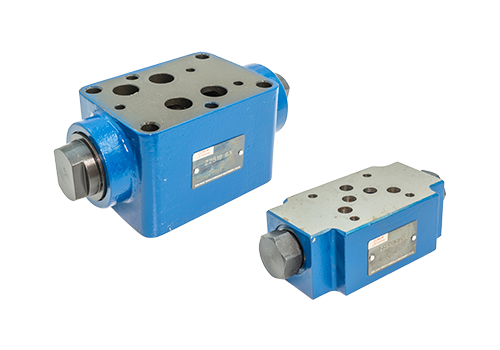
2025-09-20 The superimposed hydraulic control check valve combines the compact structure of the superimposed valve and the reverse flow function of the hydraulic control check valve. It has the characteristics of compact structure, simple installation, high system integration, accurate control, wide application scenarios, and convenient maintenance. The specific content is as follows: compact structure and small size: the superimposed hydraulic control check valve adopts a superimposed design and can be directly superimposed on hydraulic valve blocks or other valves without the need to connect to the pipeline separately. This design significantly reduces the system's volume and weight, making the hydraulic system more compact. Easy installation and short assembly cycle: Since the superimposed hydraulically controlled check valve does not require special installation skills and the components are connected without pipes, the installation process is simple and fast, and the assembly cycle is short. This helps reduce installation costs and improve production efficiency. High system integration and flexible configuration: the superimposed hydraulic control check valve not only has control functions, but also plays the role of oil passage. By adding or decreasing the superimposed valve, the changes in the hydraulic system can be easily achieved, satisfying the different
Read More 2025-09-18 The function of the 4WEH16 electro-hydraulic reversing valve is to achieve accurate switching of the flow direction of the fluid in the hydraulic system through electromagnetic pilot control, and at the same time support stable operation under high pressure and large flow conditions. It also has a variety of optional functions to meet the needs of complex hydraulic systems. The following is a specific function analysis: Direction control and flow adaptation As a slide valve reversing valve controlled by solenoid valve pilot control, 4WEH16 drives the pilot valve core movement through a solenoid to control the reversing action of the main valve core. Its design can realize the functions of two-position four-way or three-position four-way, and is suitable for hydraulic systems that require frequent switching of fluid directions, such as hydraulic presses, injection molding machines, etc. The reversing action of the main valve core is driven by pilot pressure oil, which can withstand working pressure up to 35MPa and flow rate of 1100L/min, meeting the needs of high-power hydraulic equipment. High precision and stability guarantee adopts spring centering or hydraulic centering structure, and the main valve core can automatically return to the intermediate position when there is no control signal.
Read More 


