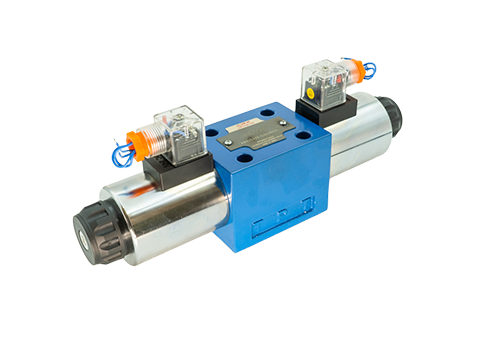
2025-11-28 The key points of storage management of 4WE10 solenoid reversing valve are as follows: The storage environment requires temperature control: it needs to be stored in a dry and well-ventilated environment to avoid extreme temperatures. If nitrile rubber seal is used, the medium temperature range is -30℃ to +80℃; for fluororubber seal, it is -20℃ to +80℃. Ambient temperatures outside this range may accelerate seal aging or cause material deformation. Humidity control: Keep the storage area dry to prevent the humid environment from causing the insulation performance of the electromagnet coil to decrease or the metal parts to rust. If stored for a long time, it is recommended to apply anti-rust oil to the metal surface and wrap it with plastic film to prevent dust. Dust-proof and anti-corrosion measures. Sealing protection: During storage, ensure that all interfaces of the valve body are closed to prevent dust and impurities from entering the internal channels. Special dust caps or tape can be used to seal the oil ports (P, A, B, T) and electrical interfaces. Media isolation: If there are corrosive gases (such as chlorine, hydrogen sulfide) in the storage environment, the valve needs to be
Read More 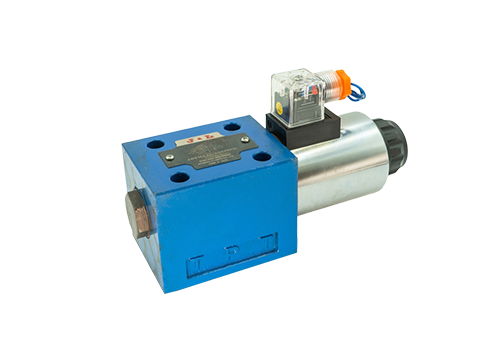
2025-11-26 The 4WE10 single-head solenoid directional valve controls the movement of the valve core through electromagnetic force to achieve switching of the oil flow direction. Its working principle and core features are as follows: 1. The working principle structure consists of the valve body: there is a closed cavity inside, with through holes at different positions (such as oil inlet P, working oil port A/B, oil return port T), and the middle of the cavity is the valve core. Electromagnet: There is an electromagnet (coil + armature) at each end of the valve body, which generates electromagnetic force when energized. Return spring: cooperates with the electromagnet to push the valve core back to the initial position when the power is cut off. Valve core: moves under the action of electromagnetic force and spring force to change the connection state of the oil port. In the power-off state during the working process: the return spring keeps the valve core in the middle position (neutral function). At this time, the oil port may be closed or in a specific connected state (such as P port closed, A/B port connected to T port). Power-on state: If the electromagnet on the right side is energized, the electromagnetic force pushes the valve core to move to the left through the push rod, so that port P is connected to port A, port B is connected to port T, and the oil
Read More 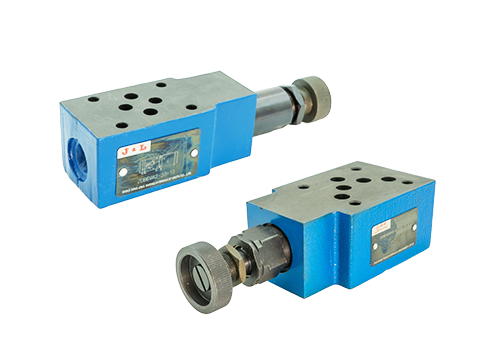
2025-11-24 The application scenarios of superimposed relief valves are as follows: 1. Pressure limiting protection and pressure stabilizing control in the field of engineering machinery. Excavators and loaders: used as the main oil circuit pressure limiting valve in the hydraulic system to prevent cylinder or pump damage caused by overloading of the system. For example, when the load suddenly increases, the relief valve opens to release excess pressure and protect the safety of the equipment. Hydraulic lifting platform: By stabilizing the system pressure, it ensures that the platform lifts at a safe speed and avoids shaking or loss of control due to pressure fluctuations. Remote pressure regulation and multi-stage pressure control multi-station equipment: Utilize the remote control port (X port) of the pilot relief valve to achieve remote pressure regulation through the solenoid valve. For example, in an automated production line, when different workstations require different working pressures, the setting value of the relief valve can be adjusted remotely through electrical signals to reduce manual intervention. Testing machine: During the material tension and compression test, the pressure of the relief valve is continuously adjusted through the proportional electromagnet to realize complex control logic such as ramp pressure rise/fall, pressure maintenance, etc.
Read More 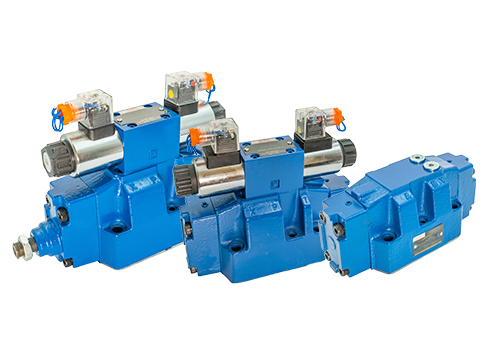
2025-11-22 Common faults and analysis of the 4WEH16 electro-hydraulic reversing valve are as follows: Unreliable reversing or failure to reversing. Fault symptoms: The system pressure suddenly drops to a low pressure state (such as 0.3MPa) during reversing. The pressure recovers after restarting, but the fault recurs when reversing again. Cause analysis: Electromagnet failure: The electromagnet is damaged or the wire is disconnected, resulting in the inability to push the valve core to move. The reset spring force of the pilot valve or main valve is insufficient: the spring is aged or broken and cannot reset the valve core. The valve core is stuck: The main valve core or the pilot valve core is stuck due to nap, dirt blockage, poor processing accuracy, etc., and cannot move. Transition function problem: The main valve core stroke is too long (such as 20mm), and it needs to go through the neutral transition function during reversal. If the control oil pressure is insufficient, the pressure difference between the two ends of the main valve core is small, resulting in unreliable reversal. Problems with the control oil circuit: The control oil pressure is too low or the flow rate is insufficient to push the valve core to move; the control oil circuit leaks, causing pressure loss. Solution: Check the electromagnet
Read More 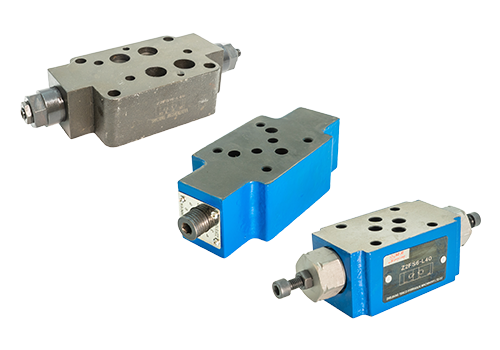
2025-11-19 The maintenance methods of the superimposed hydraulic control check valve mainly include regular inspection, cleaning and maintenance, oil replacement, parameter adjustment and keeping records. The details are as follows: Regular inspection: focus on components: Regular inspection of the superimposed hydraulic control check valve, focusing on seals, control pistons, springs and other wearing parts. Inspection content: Check whether the components are aged or damaged. If found, replace them in time. At the same time, check whether the valve is stuck to ensure that the valve can work normally. Cleaning and maintenance: Purpose of cleaning: Regularly clean and maintain the superimposed hydraulic control one-way valve to remove impurities and scale and prevent component wear and jamming. Note: During the cleaning process, special attention should be paid to the protection of precision components such as control pistons and springs to avoid damage. The cleaning agent must be a type specific for hydraulic systems. Replace the oil: Replacement cycle: To ensure the normal operation of the hydraulic system, the oil should be replaced regularly. Replacement requirements: When replacing the oil, the entire hydraulic system must be
Read More 2025-11-17 Maintenance of the 4WE10 solenoid reversing valve can be carried out according to the following steps: Preparation work: Tools and materials: Prepare appropriate wrenches, screwdrivers, lint-free cloths, soft brushes, dust blowing guns (connected to dry, oil-free compressed air), absolute ethanol (99.7 %) or isopropyl alcohol (it is strictly forbidden to use non-special cleaning agents such as gasoline, diesel, tap water, etc.), special fluorine grease or grease specified by the manufacturer (it is strictly forbidden to use ordinary engine oil, butter, etc.), gloves, goggles, and containers for small parts. Disassemble the valve core: Use appropriate tools to carefully unscrew the back cover of the solenoid valve (some models are the pilot head or the entire coil assembly). Gently take out the valve core together with the spring and other components, and record or memorize the sequence, direction and installation relationship of each component. It is recommended to take photos and save them to prevent installation errors. Clean and lubricate the valve core: Preliminary cleaning: Use a soft brush and dry compressed air to remove large particles of dust inside the valve core and valve cavity. Deep cleaning: If the valve core has stubborn oil stains or attachments,
Read More 


