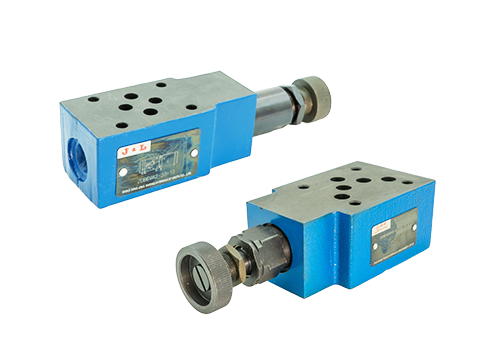
2025-08-27 The superimposed relief valve is a component that realizes pressure control of the hydraulic system through superimposed installation. It has the advantages of compact structure, flexible installation and easy maintenance. It is widely used in hydraulic systems such as machine tools, injection molding machines, and engineering machinery. In order to ensure its stable performance, extend its service life and avoid safety hazards, the following key matters should be paid attention to when using: 1. Installation and connection precautions. Installation direction and cleanliness are installed vertically: The superimposed relief valve usually needs to be installed vertically (the axis of the valve core is perpendicular to the ground) to avoid abnormal movement of the internal spring due to gravity deviation. If you need to install horizontally, you need to confirm that the product instructions allow it and install an anti-vibration bracket. Cleanliness requirements: Before installation, the hydraulic system must be thoroughly cleaned to avoid impurities (such as metal chips, seal debris) entering the valve body, causing the valve core to stagnate or seal failure. It is recommended to use a special cleaning agent to flush the pipeline and install a filter (filtration accuracy ≥10μm). Overlay order and direction overlay order:
Read More 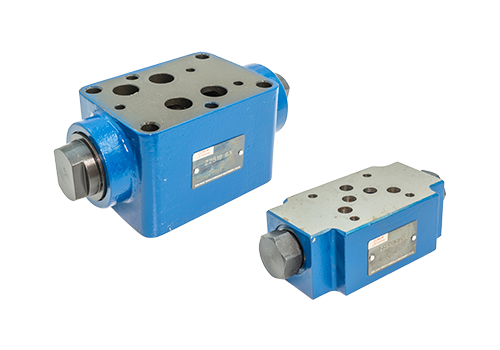
2025-08-25 The superimposed hydraulic control check valve is an important control element in the hydraulic system. It combines the one-way conduction characteristics of the check valve and the reverse opening capability of the hydraulic control function, and simplifies installation and integration through the superimposed design. Its core role can be summarized into the following five aspects, detailed descriptions based on specific application scenarios: 1. Basic functions: One-way conduction and reverse controllable opening forward flow freely. When the oil flows from the valve inlet (P) to the oil outlet (A), the valve core automatically opens under the action of oil pressure, the oil can pass without hinderment, and the pressure loss is extremely small (usually ≤0.3MPa). Application scenario: During the extension stroke of the hydraulic cylinder, oil flows from the pump to the rod-free cavity of the hydraulic cylinder. The superimposed hydraulic control check valve allows the oil to flow freely and drives the piston to move. Reverse flow hydraulic control is turned on. When oil is required to flow back from the oil outlet (A) back to the oil inlet (P), the control pressure oil must be passed through the control port (K). After the control pressure overcomes the spring force, the valve core
Read More 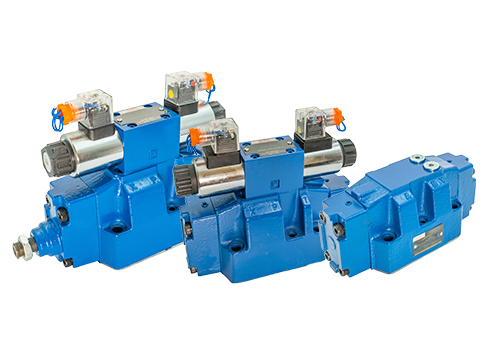
2025-08-22 4WEH16 electro-hydraulic reversing valve is a key control element widely used in hydraulic systems. It is used to switch the flow direction of hydraulic oil, thereby controlling the movement direction of the actuators (such as hydraulic cylinders, hydraulic motors). Its use needs to be combined with the characteristics of the hydraulic system, electrical control logic and environmental conditions. The following are detailed precautions for use, covering five major aspects: installation, commissioning, operation, maintenance and fault handling: 1. Check and prepare the environmental adaptability confirmation temperature range: Ensure that the working environment temperature is between -20℃ and +80℃ (if it exceeds the high-temperature or low-temperature resistant model, such as adding a heater or cooling device). Humidity control: Avoid long-term use in humid environments with humidity >85%, and prevent short circuit or corrosion of electrical components (such as solenoid coils). Dust protection requirements: The installation position should be kept away from dust sources, or a dust cover should be installed (protection level is recommended to be IP65 or above) to prevent valve core from being stuck or seal wear. Hydraulic system
Read More 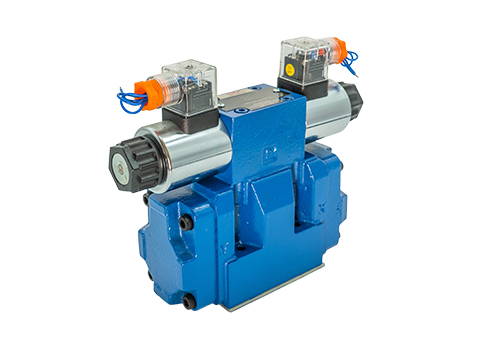
2025-08-20 4WE10 solenoid reversing valve is a solenoid-operated reversing valve, which is mainly used to control the opening, stop and reversing of liquid flow in the hydraulic system, and realize the movement control of hydraulic components or the flow direction adjustment. Its core function and working principle are as follows: 1. The core action direction control changes the valve core position through the on-off of the solenoid, thereby switching the flow path of hydraulic oil (such as P→A, B→T or P→B, A→T), and realizing the forward and reverse rotation or direction switching of actuators (such as hydraulic cylinders, hydraulic motors). Flow adjustment In some applications, by adjusting the valve core opening or matching the throttle valve, the flow of hydraulic oil can be controlled, and the movement speed of the actuator can be adjusted. System protection When the hydraulic system is overloaded or malfunctioned, the oil circuit can be cut off through the reversing valve to protect the safety of the equipment. 2. Working principle and structure composition 4WE10 solenoid reversing valve is mainly composed of the main valve body, valve core, return spring, solenoid (pilot valve) and other parts. Valve core
Read More 2025-08-18 The superimposed relief valve is a hydraulic control element that integrates the overflow function and modular design characteristics. It is widely used in hydraulic systems to achieve pressure regulation, overload protection and system pressure stabilization. Its working principle combines the core mechanism of the pilot relief valve and the compact structural advantages of the superimposed valve. The following details are explained from four aspects: structural composition, working process, characteristic analysis and typical applications: 1. Structural composition: Modular layered design Superimposed relief valve is composed of multiple functional modules superimposed by bolts, each module undertakes a specific function. The typical structure includes: main valve module: main valve core: conical or spherical structure, which cooperates with the valve seat to control the opening and breakage of the main oil passage. Spring chamber: Built-in pressure regulating spring to provide the preload force required for the main valve core to close. Pilot valve module: Pilot valve core: small conical valve, controlling the pilot oil circuit pressure. Pressure regulating screw: Change the compression amount of the pilot spring by rotation to set the system pressure. Superimposed base plate: Provides standard installation interface (such as I
Read More 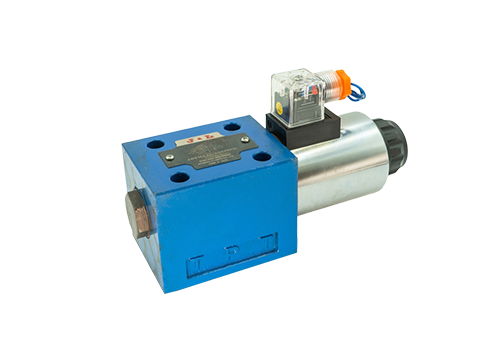
2025-08-16 4WE10 single-head solenoid reversing valve is a common hydraulic control element. It belongs to the wet solenoid reversing valve series. It is produced by German Rexroth and other manufacturers and is widely used in industrial hydraulic systems. Its core function is to control the flow direction of hydraulic oil through electromagnetic force to realize the reversal, start, stop or speed adjustment of actuators (such as hydraulic cylinders and hydraulic motors). The following is the specific application scope and characteristics analysis: 1. Core application areas 1. Engineering machinery application scenarios: hydraulic systems of excavators, loaders, road rollers and other equipment. Function: Control the expansion and contraction of the hydraulic cylinder (such as the lifting and lowering of the boom and bucket) to realize the reversing action of the working device. Advantages: fast response speed (usually ≤ 50ms), strong anti-pollution ability, suitable for harsh working conditions. 2. Application scenarios of plastic machinery: hydraulic systems of injection molding machines, extruders, and blow molding machines. Function: Control the opening and closing of the mold, the action of the ejection mechanism, and the hydraulic motor
Read More 


